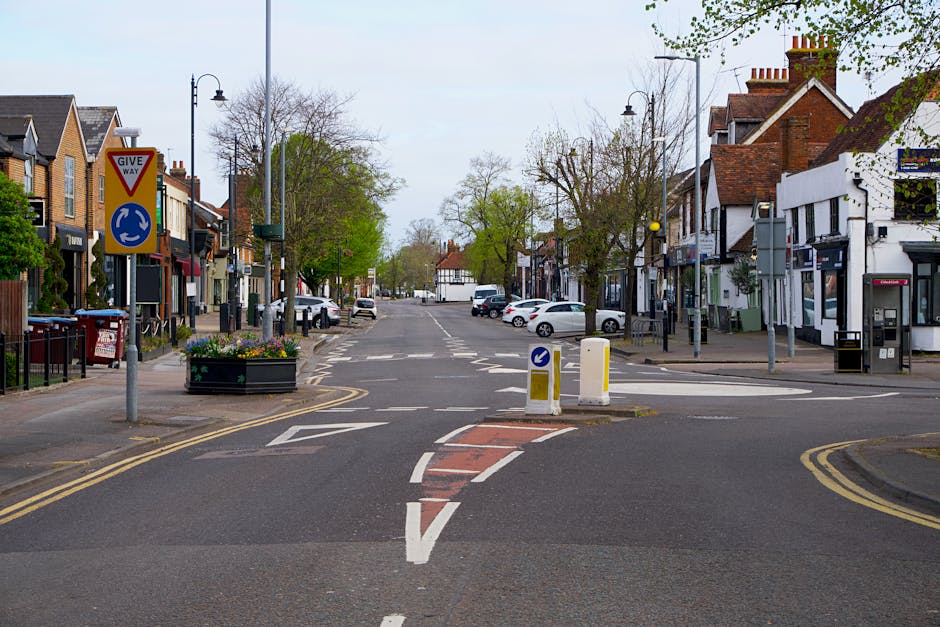
Morden moves: best streets for quick loading (SM4)
If you're planning a move in Morden, the difference between a calm morning and a chaotic one often comes down to one thing: where the van can load quickly. Streets in SM4 vary a lot. Some give you a straightforward kerbside stop, others can swallow half your morning in double-parking drama, tight corners, or awkward access. That's why a smart move starts before the boxes even leave the hallway.
This guide on Morden moves: best streets for quick loading (SM4) is built for real-life moving day decisions. It explains which parts of Morden tend to work best for faster loading, what makes a street practical, and how to plan around local constraints without turning the whole thing into a siege. If you want a smoother move, fewer delays, and less heavy lifting back and forth, you're in the right place. To be fair, that's usually what everyone wants anyway.
We'll cover the best street types for quick loading, how to judge access, what to avoid, and how to prepare if you're using a man with van in Merton, booking man and a van services, or arranging a fuller home move through house removals in Merton. There's also a practical checklist, a comparison table, and a few local-style examples so you can make better decisions quickly.
Table of Contents
- Why Morden moves: best streets for quick loading (SM4) Matters
- How Morden moves: best streets for quick loading (SM4) Works
- Key Benefits and Practical Advantages
- Who This Is For and When It Makes Sense
- Step-by-Step Guidance
- Expert Tips for Better Results
- Common Mistakes to Avoid
- Tools, Resources and Recommendations
- Law, Compliance, Standards, or Best Practice
- Options, Methods, or Comparison Table
- Case Study or Real-World Example
- Practical Checklist
- Conclusion
- Frequently Asked Questions
Why Morden moves: best streets for quick loading (SM4) Matters
Loading speed is not a small detail. It shapes the whole moving experience. In Morden, the street itself can either help or hinder you. A short, unobstructed loading stop means fewer trips, less carry distance, and much lower stress for everyone involved. On a narrow street, every extra metre matters. That sounds obvious, but moving day has a habit of exposing all the things you meant to sort out yesterday.
Quick loading matters most when you're dealing with time-sensitive moves, limited parking, or heavier items such as wardrobes, sofas, or white goods. A street that looks fine on a quick visit can become awkward once a van is actually parked there. Traffic flow, resident parking, corner visibility, school run timing, and the width of the road all affect how easy the load-in and load-out really is.
If you've ever watched a mover shuffle a chest of drawers up and down a pavement twice because the van couldn't get close enough, you already know the hidden cost of poor access. It's not just slower. It can raise the risk of scuffs, fatigue, and that lovely last-hour panic where everyone starts checking the clock every five minutes.
That is why people planning a move in SM4 often compare access as carefully as price. It's sensible. In some cases, it can be worth reading broader local guidance too, like removals in Merton or the company's services overview, so you can see how route planning, vehicle choice, and loading support fit together.
How Morden moves: best streets for quick loading (SM4) Works
The phrase "best streets for quick loading" doesn't mean there's a single perfect road where every move becomes easy. It means identifying streets and conditions that reduce friction. In practical terms, you're looking for roads with enough width to pull in safely, good sightlines, space for a van to pause without blocking the world, and manageable walking distance from front door to vehicle.
In Morden, the most useful streets tend to share a few traits:
- wide enough for a van to stop briefly without causing a standstill
- clear kerb access near the property entrance
- less competition from commuter parking at the exact time of your move
- reasonable pavement access for trolleys or movers carrying boxed items
- low exposure to tight bends, speed humps, or awkward junctions
That does not mean a narrow residential road is unusable. Not at all. It may simply mean you need a different approach: smaller vehicle, staggered loading, better timing, or pre-arranged parking checks. A street can be "quick loading friendly" in the right conditions and a headache in the wrong ones. Real life is annoyingly flexible like that.
A good moving team will normally assess whether the job is better suited to a standard van, a larger removal vehicle, or something more agile such as a removal van in Merton. They may also suggest same-day removals in Merton if timing is tight and access is straightforward enough to make it worthwhile.
It also helps to think in terms of flow. Can the movers carry items in a straight, uninterrupted line? Or will they need to weave around railings, bins, parked cars, or steps? The easier the flow, the quicker the load.
Key Benefits and Practical Advantages
Choosing a street that supports quick loading is one of the easiest ways to make the move feel more organised. The benefits show up in small ways first, then all at once.
- Less time on the clock: If the van parks close to the door, loading happens faster and the job can stay on schedule.
- Lower physical strain: Shorter carry distances reduce fatigue, especially with bulky furniture.
- Better protection for items: Fewer handovers and shorter routes often mean fewer knocks and bumps.
- Cleaner coordination: Drivers, movers, and household helpers can work from the same access point without confusion.
- More predictable pricing: Efficient access can help keep labour time and vehicle time under control. For a better sense of cost structures, it's worth reviewing pricing and quotes alongside competitive prices.
There's another benefit that people sometimes overlook: mental relief. When the street works in your favour, the day feels manageable. You stop worrying about whether the wardrobe will fit, whether the van will be blocked in, whether the neighbour's car will suddenly appear. Little things, yes, but they matter.
For people moving from flats or smaller homes, the difference can be especially noticeable. A direct kerbside stop can make flat removals in Merton feel much less punishing. For larger households, it can help structure a full furniture removals plan around heavy items first, lighter pieces later.
Who This Is For and When It Makes Sense
This topic matters to far more people than first-time movers. If you're relocating anywhere in SM4, quick loading planning can save time and money. But some readers will feel the benefit more than others.
You'll care most if you are:
- moving from a street with limited parking or frequent traffic
- living in a flat where lift access is uncertain or shared
- handling a tight turnaround between move-out and move-in
- moving with children, pets, or older relatives in the mix
- transporting heavier or fragile items that should not be carried too far
- working to a fixed booking window with a removals team
Students and renters often need speed because tenancy dates rarely feel generous. That's where student removals in Merton can benefit from a street that allows a fast load-up without lots of back-and-forth. Office movers need the same logic, only with more boxes and a slightly more serious expression on everyone's face; office removals in Merton often depend on access that keeps business disruption low.
There's also a clear fit for people who are moving at short notice. If you're juggling a last-minute key handover, a parking challenge, and a stack of boxes still half-packed, having a street that allows an efficient loading routine is not a luxury. It's a lifeline, truth be told.
Step-by-Step Guidance
If you want to identify the best loading conditions in Morden, use a simple process. No fancy jargon. Just a sensible local check.
- Check the property frontage. Look at how close a van can reasonably stop to the front door, gate, or entrance. Notice any railings, bollards, trees, or tight bends.
- Look for parking pressure. Visit at the same time of day you plan to move. Morning may be calmer than late afternoon, or vice versa.
- Measure the carry distance. Even a short extra walk can slow the whole job when there are multiple large items.
- Think about loading sequence. Put the heaviest items nearest the van access point, then build around them. A good packing and boxes service in Merton can help make this smoother.
- Check whether the vehicle size matches the street. A smaller vehicle may outperform a larger one if the road is tight. Efficiency beats ego here. Every time.
- Allow for local disruption. School pickup times, bin day, roadworks, and nearby shops can all change conditions in a way that is easy to miss until the morning itself.
- Plan the final metre. People often plan the route to the street and forget the route from van to door. That last stretch is what you'll feel in your shoulders.
For some moves, especially those involving a full household, the smartest move is to build the route around the street rather than trying to force the street around the route. That means deciding in advance where the van will stop, who will guide it, and which items leave first.
If you need a broader support package, it can help to look at removal services in Merton as a whole rather than treating loading as a separate problem. The best outcomes usually come from joined-up planning, not improvisation.
Expert Tips for Better Results
Here's where the small things really pay off.
1. Arrive earlier than you think you need to
Not dramatically early, just enough to spot the little snags. A delivery van parked opposite your front door can turn a quick plan into a slow one. If you've got ten minutes to spare, use them. Move day rarely rewards people who cut it fine.
2. Keep the loading zone clean and obvious
Bins, scooters, trailing plant pots, and random bits of furniture can slow a team down more than you'd expect. Clear the space the night before if you can. It makes a difference. A visible, unobstructed entrance tells everyone where the work starts.
3. Pack for the street, not just the room
If the route to the van is narrow or uneven, sturdy boxes matter more than neatness. Square, well-taped boxes stack better and carry more safely. Delicate items should be grouped logically so the team does not have to stop and rethink the load halfway through.
4. Use helpers where they add value
Friends and family are lovely, but they are not always efficient loaders. One person holding doors, one guiding the van, and one managing boxes can work well. Four people all giving advice from the pavement? Less helpful. Slightly chaotic, actually.
5. Match the service to the task
Not every move needs the same solution. A compact flat move may suit a man with a van in Merton, while a larger household may need a fuller team or even structured house removals in Merton. The right fit tends to save time before the van even arrives.
6. Don't ignore specialist items
If your move includes a piano, art, or awkward furniture, access matters even more. A quick-loading street can be undermined by one difficult item if you haven't planned it properly. Specialist support such as piano removals in Merton can be worth it when the item is heavy, delicate, or unusually valuable.
Expert summary: The best street for quick loading is not always the widest one. It is usually the one that allows safe stopping, short carry distances, and a smooth, predictable route from front door to vehicle.
Common Mistakes to Avoid
People usually don't make one huge mistake. They make a few small ones that add up.
- Assuming every street in SM4 is equally easy. It isn't. Access can change block by block.
- Ignoring the time of day. A road that feels fine at 10 a.m. may be packed at school run time or after work.
- Choosing a vehicle before checking the street. The van should suit the access, not the other way round.
- Overpacking boxes. Heavy boxes slow the carry and create a safety issue.
- Leaving loose items for the last minute. Those are the things that steal time when the van is waiting.
- Not checking parking or local restrictions early enough. Even when the street itself is good, the loading plan can fail if parking is unclear.
One easy-to-miss problem is overconfidence. You stand on the street, glance up and down, and think, "That'll do." Then moving day arrives, a neighbour's car is in the best spot, and suddenly everyone's improvising. Happens all the time.
Another common issue is forgetting the return route. If the street is one-way or awkward to re-enter, the van may need to reposition more than once. That can be the difference between a neat, quick load and a morning that drags on far longer than expected.
Tools, Resources and Recommendations
You do not need fancy kit to make a Morden move work well, but a few practical tools can help a lot.
- Mobile mapping apps: Useful for checking street widths, route timing, and one-way systems.
- Parking awareness: Look at the street in advance if possible, ideally during a busy period.
- Boxes with clear labels: Faster sorting means faster loading and fewer questions on the pavement.
- Protective wrap and blankets: Helps keep items safe when the load-in is tight or slightly awkward.
- Trolleys and straps: These can reduce strain on longer carries and make the moving process much more controlled.
If you're comparing moving support, it can help to read a service breakdown before booking. Pages like removal companies in Merton and about us can give you a better feel for how a business approaches planning, care, and local knowledge. The right mover should be able to explain access issues in plain English, not hide behind vague promises.
For people who want a basic price reference, look at pricing and quotes and compare it with the broader value of time saved, labour reduced, and stress avoided. Cheap is fine. Cheap and workable is better.
Law, Compliance, Standards, or Best Practice
Moving day in Morden usually does not involve complicated legal issues, but there are still sensible standards to follow. If a van is stopping on a public road, the driver and customer should be mindful of parking restrictions, access for other road users, and any local rules that apply to the street. If in doubt, it is better to check than assume.
Best practice also matters for safety. A good mover should plan lifting, loading, and vehicle positioning in a way that reduces risk to people and property. That means clear communication, stable stacking, sensible weight distribution, and avoiding unsafe shortcuts. If you want reassurance about how a company handles these issues, it is worth reading its health and safety policy and insurance and safety information.
For customers who care about ethical operations, compliance pages can also be useful. They may not affect your loading plan directly, but they do tell you something about how a company works. You can also review terms and conditions and payment and security to understand what to expect before booking.
And if you're the sort of person who likes everything neat and clear, fair enough, there's nothing wrong with that. A move goes better when the practical and the procedural are both sorted.
Options, Methods, or Comparison Table
Different access conditions call for different loading methods. The table below gives a simple way to think about it.
| Loading setup | What it suits | Pros | Watch-outs |
|---|---|---|---|
| Kerbside stop close to the door | Small to medium moves, flat access, quick turnaround | Fast, efficient, less carrying | Needs clear parking space and safe stopping |
| Short carry from a nearby bay | Typical residential streets with moderate access | Still workable, less direct pressure on traffic | More labour time, more back-and-forth |
| Smaller vehicle, tighter street | Narrow roads or awkward corners | Better manoeuvrability, easier positioning | May need more trips if load is large |
| Staged loading with helpers | Homes with mixed item sizes or shared entrances | Organised flow, smoother packing of the van | Needs coordination and clear task roles |
In practice, many Morden moves use a mix of these methods. That is perfectly normal. The trick is choosing the setup that saves the most time without making the road unsafe or the load awkward.
Case Study or Real-World Example
Imagine a straightforward Saturday morning move from a first-floor flat in SM4. The street is residential, but parking is tighter than expected because a few neighbours have visitors over. The team arrives, finds the best possible stopping point, and immediately notices that the front path is clear but the carry to the van is longer than planned.
Instead of trying to force the original plan, the movers shift to a more efficient rhythm. Heavy boxes go first. Soft items and lighter bags follow. One person keeps the entrance clear while another guides the load. There's no running, no drama, no overthinking. The van fills neatly, and the move finishes faster because the team adapted to the street rather than fighting it.
That's the real lesson. A good move is rarely about perfection. It's about reading the street properly and making the best choice with the space you've got. Some streets reward that approach more than others, and Morden is no exception.
For households with larger or more awkward items, combining good street access with practical support, such as furniture removals or extra packing help, can make a noticeable difference. Little gains stack up quickly.
Practical Checklist
Use this quick checklist before moving day.
- Confirm the exact loading point outside the property
- Check whether the street is better in the morning or afternoon
- Review parking, bays, and any nearby restrictions
- Measure or estimate the carry distance from door to van
- Decide whether you need a smaller vehicle or a standard removal van
- Separate heavy and fragile items before loading starts
- Label boxes clearly so the team can load in the right order
- Clear the entrance, hallway, and path to the street
- Keep keys, paperwork, and essentials in one easy-to-reach bag
- Speak to your mover about access concerns before the day arrives
Quick takeaway: the best streets for loading are the ones that reduce delay, simplify the carry, and let the team work safely. If you can remove even one or two access problems in advance, you will feel the difference.
Conclusion
Finding the best streets for quick loading in Morden is really about understanding the local rhythm of the area. A street that looks ordinary on paper can be brilliant for a move, while another can quietly add half an hour of faff. The good news is that a little planning goes a long way.
Focus on access, parking, timing, and the distance from door to van. Match your vehicle and service to the street, not the other way round. And if the move involves heavy furniture, short notice, or a tricky property layout, choose support that has a proper handle on local conditions. It makes everything easier.
If you're still weighing up your options, take a look at the wider local service pages, including removal services in Merton, man and a van in Merton, and the company's recycling and sustainability approach. That sort of detail helps you choose with confidence rather than guesswork.
Get a free quote today and see how much you can save.
Some moves are complicated, yes. But with the right street, the right timing, and a steady plan, they don't have to feel heavy. Sometimes the whole day gets easier just because the van can pull up in the right place.
Frequently Asked Questions
Which streets in Morden are best for quick loading?
The best streets are usually the ones with good kerb access, enough width for safe stopping, and lighter parking pressure at the time of your move. Rather than focusing only on one exact road, it helps to assess the immediate frontage and nearby traffic patterns.
Do I need a larger removal van for Morden streets?
Not always. A larger van can be efficient on open streets, but a smaller or more agile vehicle may be better on tighter roads. The right choice depends on access, not just how much you're moving.
How can I tell if my street is suitable for quick loading?
Check whether a van can stop close to the entrance, whether the carry route is clear, and whether parking is likely to be available when you need it. Visiting the street at the same time of day as the move can be surprisingly helpful.
What if parking is limited on my moving day?
If parking is tight, speak to your mover early so they can plan around it. Sometimes a smaller vehicle, a different loading time, or a staged approach is the simplest solution.
Is quick loading important for small moves too?
Yes. Even a small move becomes much easier if the van can get close to the door. Quick loading reduces carrying time and helps avoid unnecessary handling of boxes and furniture.
Should I pack differently if the street is awkward?
Yes. Use sturdy boxes, avoid overfilling, and group items by weight and fragility so the team can load in an efficient order. Awkward streets reward tidy packing.
Can a man and van service handle quick loading in Morden?
Absolutely, if the access is suitable and the load size is realistic. A man and van service in Merton can be a very practical choice for smaller or faster moves.
What should I do if my property has a long walkway?
Tell the mover in advance and plan for a longer carry. Use trolleys if appropriate, clear the route, and make sure fragile items are packed securely. Long walkways can slow the job, but they are manageable with preparation.
Are there any safety issues with loading from the street?
Yes, mainly around traffic, lifting, and vehicle positioning. Safe practice matters: clear communication, sensible stacking, and awareness of passers-by all help reduce risk.
How far in advance should I plan loading access?
As early as possible. Even a quick pre-check a few days before the move can reveal parking pressure, narrow access, or local timing issues that are easy to solve before moving day.
Can local guides help me choose a better moving day?
They can help you understand the area, nearby parking patterns, and local movement around key streets. If you want a broader sense of Morden life and neighbourhood context, local reading such as exploring Merton's streets and buying property in Merton smart tips can be a useful starting point.
How do I avoid delays on a moving morning?
Clear the entrance, pack the essentials separately, confirm parking arrangements, and keep the loading plan simple. The less improvisation needed on the day, the smoother things usually go.
For more local context and practical insight, you may also find it helpful to read about Merton property market insights or local community views in considering Merton locals share thoughts. They can help you understand how different parts of the area feel in real life, which is often half the battle.